Monday, 23 July 2018

Kipling, Racism and Political Correctness

 I don't often find myself ahead of the news, but it's remarkable how the fuss caused by the painting over of Kipling's "If" at Manchester University followed my last post, discussing whether or not it was right to describe Kipling as a warmonger. For those who do not know, the poem was painted as a mural on a wall in the Students' Union, and replaced by a poem by Maya Angelou. Frances Perraudin, in The Guardian, quoted Sara Khan, the union’s liberation and access officer as saying:
"“We, as an exec team, believe that Kipling stands for the opposite of liberation, empowerment and human rights – the things that we, as an SU, stand for..."
She went on to say that Kipling was:
 "Well known as author of the racist poem The White Man’s Burden, and a plethora of other work that sought to legitimate the British empire’s presence in India and dehumanise people of colour".
There is not a racist line in "If", pictured above, and it is arguable whether "The White Man's Burden" is racist or not, but I would not deny that Kipling shared the racist ideas of his time, inasmuch as he said that Indians would never rule India. However, as Andy Zehner has said: 
"Kipling never shied away from observing the oddities and perplexing ways of India and its many people groups. But he respected them, and admired many of them. His greatest admiration appears in “The Head of the District,” where he contrasts the virtues of the Muslim tribes of the northwest frontier against unworthy British administrators."
Ironically, as George Orwell said of Kipling in India:
 "...because of his dark complexion he was wrongly suspected of having a streak of Asiatic blood". 
The actions of the SU executive at Manchester University are clearly hasty and ill-considered.
As might have been expected, by painting-over of the mural, the SU officers drew severe criticism of themselves, and, unfairly, all Manchester University students. Chris McGovern, of the Campaign for Real Education, criticised the Manchester students saying:
 ‘This is outrageous cultural vandalism. Kipling is a much beloved poet".
 Nick Ferrari, on LBC said:
 "Don’t take this the wrong way but if there was war you wouldn’t worry about these damn stupid things".
As ever, the accusation of "political correctness" raised its head, and I think it's worth discussing. The term is defined as being:
 "... used to describe language, policies, or measures that are intended to avoid offense or disadvantage to members of particular groups in society."
It is also used in a pejorative sense by right-wing pundits when they wish to ridicule what they see as irritatingly petty leftist or minority activity such as the Manchester students' action. The fact is, though, the term PC might be new, but the activity has always been with us, albeit in a different form. In Kipling's day, it was PC to admire the Empire; in Ancient Rome, it was PC to own slaves; in Nazi Germany or Stalin's USSR, it was definitely not PC to criticise the current regime. The political right has its own ideas of what is PC, despite criticising the left for theirs.
The problem with actions like that of the Manchester students is this: once you start censoring the works of a long-dead writer, where do you stop? Professor Janet Montefiore of Kent University, has said:
"Dickens said dreadful things about black people in the Jamaica rebellion. Does that mean you don’t read Dickens?”
The same question could be asked of Joseph Conrad, who wrote a book with what some might consider a racist title: "The Nigger of the Narcissus". Presumably, he should be banned also. Then there is Shakespeare, with his derogatory views on women in "Romeo and Juliet":
 "Women may fall when there's no strength in men".
Another prime target for banning would be the Christian Bible. From the Old Testament, we read:
 "Of the woman came the beginning of sin, and through her we all die." (Eccles. 25:22)
And from the New Testament:

"But I would have you know, that the head of every man is Christ; and the head of the woman is the man; and the head of Christ is God." (I Corinthians 11:3)


"For the man is not of the woman; but the woman of the man. Neither was the man created for the woman; but the woman for the man." (I Corinthians 11:8-9)
Added to this blatant chauvinism, there is a definite Zionist influence on Biblical writers. Here is just one example:
Genesis 17:8: "I will give unto thee, and to thy seed after thee...all the land of Canaan, for an everlasting possession; and I will be their God".
This is highly offensive to all Palestinians and is clearly intolerable.

How do the students at Manchester restrain themselves from destroying every Bible they can find? Should they ban Christian speakers from the Students' Union? Should they ban Christians?

It is possible to find equally misogynistic quotes in the Qu'ran, but banning the Muslim holy book would be Islamophobic.


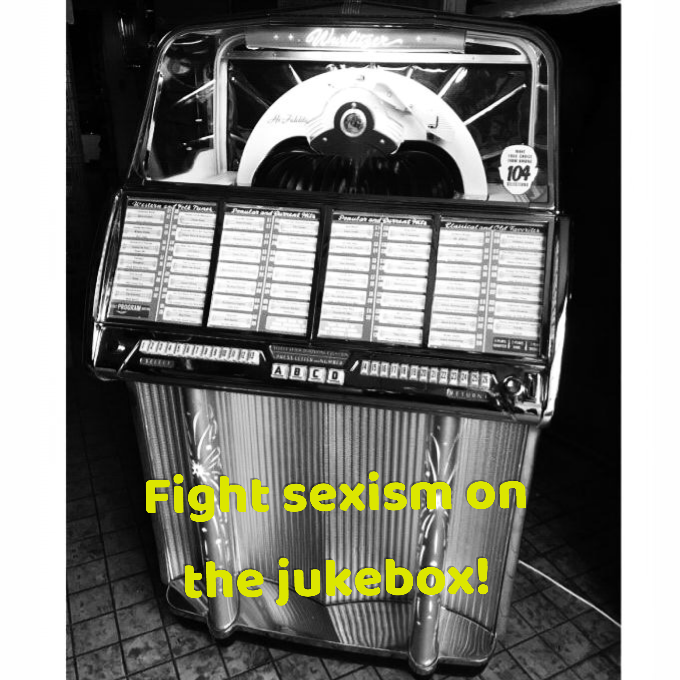
And why confine your censorious efforts to literature? Music, also, deserves to be banned if it is racially or sexually offensive. Back in the 70s, when I was at University, a female IMG member told me that the now classic rock anthem "Brown Sugar" by The Rolling Stones should be banned, as it was: "...racist and sexist at the same time". Happily, the music industry was not swayed by her opinion, and the song rocks on. Still, if the Manchester students have started a trend, The Rolling Stones (and many others) could be banned from every juke box in every British Students' Union. Guns N' Roses would almost certainly be banned. Consider this lyric, from "It's So Easy": 

"Turn around, bitch, I got a use for you/ Besides, you ain’t got nothing better to do"

Very un-pc! And what about The Beatles. Consider this from "Getting Better":

 "I used to be cruel to my woman/I beat her and kept her apart from the things that she loved"


Yes, the PC zealots in every student union will have plenty to do, banning, purifying and fighting sexism on the jukebox. They will not ban misogynistic rap music, of course, as that would be racist.

Do I really expect this to happen? Well, no, I was deliberately exaggerating - something I have been told to stop doing millions of times. But the fact is that the painting over of Kipling's poem has set a precedent, and some, perhaps all, student union bodies will follow their example. Fascists are not the only totalitarians.


Monday, 9 July 2018

Rudyard Kipling the Warmonger - a Charge Examined

The picture above shows the writer, Rudyard Kipling (RK), speaking at a recruiting rally in my home town of Southport, Lancashire, in 1915. I discovered this photo on the Facebook page of a Southport history group, where Kipling received some harsh criticism. I cannot now locate the link, but as far as I can remember, one group member dismissed RK as being one of those people, like Tony Blair, who send others (not identified by the member) off to war while remaining safely at home. 
Now, it is undeniable that RK supported Britain's war effort in WW1, but, to fully assess the charge of warmonger against him, we really should examine the historical context. 
First, we should remember that Kipling was an influential writer in his day, writing many books, short stories and poems about the British Empire and Britain's manifold destiny as an imperial power, in which he passionately believed. As this viewpoint has long since vanished along with the Empire, it is only too easy to sneer at RK, misquote him, or quote him out of context. Just one example will suffice: "Lesser breeds without the law". This is usually interpreted as flagrant racism, but it is the wrong interpretation. It is taken from his poem "Recessional" and almost certainly refers to Germany, for which country RK had an abiding aversion. This is not to say that RK was without the imperial prejudices of his time. As George Orwell observed in his 1942 essay on RK:
"It is no use claiming, for instance, that when Kipling describes a British soldier beating a 'nigger' ...in order to get money...he is acting merely as a reporter and does not necessarily approve what he describes".
Orwell is right, but Kipling was more than the author of "Gunga Din" ("I've belted you and flayed you"). Although he never fought in a battle, he wrote with sympathy of the fate of the ordinary British soldier, and he wrote a penetrating critique of expat life in late 19th century India in a book of short stories called "Plain Tales From the Hills", which is emphatically not a glorification of British India - even though RK approved of "The Raj". 
Returning to the warmonger charge, we need to understand the international political situation before and during WW1. The arms race between Britain and Germany was a constant cause for concern to political conservatives such as Kipling. When war began in 1914, the German invasion of France and Belgium must have seemed a vindication to Kipling of his anti-German views. If we dismiss him as a simple warmonger, we forget that he was not alone in his anger over German aggression and (admittedly exaggerated) atrocities in Belgium. Professor Peter Simkins has said of recruitment in 1914: 
"In all, 478,893 men joined the army between 4 August and 12 September, including 33,204 on 3 September alone – the highest daily total of the war and more than the average annual intake in the years immediately before 1914".
Kipling supported the recruiting effort wholeheartedly, although it is difficult to say how many men joined the army in 1914 because of his efforts. He is thought to have been the first person to refer to the Germans as "Huns", further expressing his hatred in lines such as this:
"There are only two divisions in the world, human beings and Germans".
This view is shocking to us nowadays, but it was widespread in the early years of WW1, and Kipling cannot be blamed for his views in isolation. This is not to say he was right, but we have to allow for popular sentiment at the time. There was widespread support for the war in every combatant nation, and did not decline for several years. We forget, also, that political personalities of all shades of opinion supported the war. One notable left-wing supporter of the conflict was trade union leader, Ben Tillett. As Spartacus International says:
"Unlike many socialists, Ben Tillett fully supported Britain's involvement in the First World War. His enthusiasm for aerial bombardment of German civilian centres and his views that pacifists should be severely punished, made him unpopular with many people in the labour movement. Tillett travelled throughout Britain and helped to recruit a large number of industrial workers into the armed forces."
As a recruiter, Kipling was only one of many celebrities of the day to assume this role. We are familiar with the impact of Lord Kitchener's poster, and the influence of the popular press at the time. This is now thought of as the start of the age of "spin". But there is another factor to be included here, and that is the music hall. In an age without cinema and TV, the music hall provided popular entertainment for the masses, reflecting and reinforcing popular attitudes. Hours after war broke out in 1914, songs supporting Britain's entry into the war were being composed and sung. As John Lewis Stempel has written:
"Music Hall’s support for the war effort is sometimes interpreted as a ruling class conspiracy to “sell” the war to the workers, but the British elite was never that organised. Music Hall reflected and enlarged popular attitudes. Where Music Hall did consciously “sell” the war it did exactly that; it made money from it. Music Hall was always good at cashing in. In the August 13, 1914, edition of the trade newspaper, The Encore, songwriters advertised they would add “a war verse” to any given song: For a fee".
The cross-dressing singer, Vesta Tilley, would invite young men on stage and invite them to join the forces; those who refused were handed a white feather. The music hall legend, Marie Lloyd, sang to young men a song called " I Do Like Yer, Cockie, Now You’ve Got Your Khaki On". The double entendre would not have been missed!
In short, if Rudyard Kipling was a warmonger, he was not alone in this, and can hardly be singled out for vilification. He shared popular sentiment, but did not create it. If he is to be condemned, what are we to make of Ben Tillett and Vesta Tilley?
Kipling did not serve in the front line. He was too old and had poor eyesight, like his son, Jack. John Kipling should never have been allowed to join the infantry because of this, but RK pulled strings to get his son a commission in the Irish Guards. John was killed at the Battle of Loos in September, 1915, shortly after the photograph above was taken. Like thousands of other families, the Kiplings were victims of the First World War. Instead of hatred, Kipling poured his grief into his poem, "My Boy Jack":
"Have you news of my boy Jack? Not this tide When d’you think that he’ll come back? Not with this wind blowing, and this tide."
Vesta Tilley


Tuesday, 12 June 2018

Tommy Robinson, Terrorism and Hearts That Change

Repentance is not a word used much nowadays outside a theological discussion. Basically, it means to feel regret for one's actions and make an effort to do better in future. As Wikipedia says:
 "Today, it is generally seen as involving a commitment to personal change and the resolve to live a more responsible and humane life".
In a religious context, of course, repentance involves sorrow for sinful behavior, confessing that sin to a priest or to God himself in prayer, as laid down in the Bible verse, 1 John 1:9: 
"If we confess our sins, he is faithful and just to forgive us our sins, and to cleanse us from all unrighteousness."
 Divine forgiveness is freely given, but the repentance must be accompanied by genuinely sincere attempts to never repeat that particular sin, or it is worthless. Evangelical Christians call failure to do this "backsliding". 
In a political context, repentance is probably not a word that should be used. After all, I could be a Communist secret policeman who, when times change, becomes a vocal supporter of liberal democracy. If, as a secret policeman, I am a serial adulterer and continue engaging in infidelity following my political conversion, then I am still, by religious standards, an unrepentant sinner. Changing political behaviour is not the same as a change in moral behaviour. 
Nevertheless, I think we can legitimately accuse Tommy Robinson, aka Stephen Yaxley-Lennon, pictured above, of political backsliding and false repentance. Back in 2013, he resigned as leader of the English Defence League, and announced his intention to work with Quilliam to counter extremism among Muslims. At the time, Esther Rantzen made the very valid point that if we treated Robinson with overt cynicism, we would only discourage others who wanted to come in from the extremist fringe.
Sadly, that cynicism was not misplaced in the case of Tommy Robinson. He did work with Quilliam for a while, later claiming that he was being paid £2000 a month, which the organization denied. Whatever he was paid, it did not stop him from pleading guilty (confessing his sin?) to two charges of mortgage fraud in 2012, for which he received a prison sentence of 18 months. Robinson is no stranger to the judicial system and has a number of criminal convictions, including being jailed for passport fraud in 2013. In 2015, he returned to his anti-Islamic campaigning by founding a UK branch of Pegida, the anti-Islamic movement founded in Germany. He then became a correspondent of Rebel MediaUK in which he features strongly, propounding his anti-Muslim views. He is now in prison, as we all know, for contempt of court. A disturbingly large number of his supporters demonstrated in London calling for the government to "Free Tommy".

So - what price repentance or changes of heart by political extremists? One of Lee Rigby's killers, Michael Adebolajo, has expressed remorse for his actions. As the Sun said:
 "The killer has finally admitted his guilt and expressed "regret" in a bombshell jail confession, adding that he plans to write a letter of apology to the soldier's family."
Safaa Boular, the 18-year old  girl convicted on terrorist charges recently, has also expressed remorse for her actions. As The Guardian says: 
"In the witness stand, Safaa appeared as a typical teenager, having discarded her strict Islamic clothing for pencil skirts and Nike tracksuit tops.She told jurors she had ditched religion after speaking to other young people behind bars, having spent her schoolgirl days knowing “Islam and nothing but Islam”. She said watching the Isis videos now reduced her to tears because she “could not believe” she was capable of watching them before."

Now, if these declarations are sincere, they are to be welcomed. But this is similar to what happened with Tommy Robinson back in 2013. Robinson is utterly opposed to Adebolajo, Boular and the ideology they claim to have abandoned, but his "backsliding" will make people very suspicious of the true aims of them both, and of others like them in the future.

Tommy Robinson will like that.

Friday, 18 May 2018

Israel - Mass Killing No Massacre?

It will come as a surprise to some people to learn that I was appalled at the recent fatal shootings of 60 Palestinians by the Israeli Defence Force (IDF), and the more than 2,700 who were shot and wounded. The IDF have said that their response to the mass Palestinian  demonstration was proportionate to the threat they faced, and all shootings were "surgical". Plenty of surgery was needed in Gaza's City Hospital:
 "Gaza City’s Shifa Hospital received 284 injured people Friday, the majority with bullet injuries, said spokesman Ayman Sahbani. He said 70 were under the age of 18 and 11 were women."
This does not sound like surgical shooting to me; indeed, it sounds as if the IDF soldiers lost their heads and shot indiscriminately. The Israelis seem incapable of seeing how their heavy-handed reactions to Palestinian attacks bring international condemnation not just from their enemies, but, increasingly often, from their friends and from independents like me. I totally endorse criticism from Amnesty International, Save the Children and other NGOs on this issue and believe that an independent international inquiry is needed. As Amnesty says:
"While some protestors may have engaged in some form of violence, this still does not justify the use of live ammunition.Under international law, firearms can only be used to protect against an imminent threat of death or serious injury.”
At this point, anti-Zionists who have read my previous blogs on the Palestinian/Israeli conflict will be saying: "At last! He's seen the light! He's on our side now!".
Well, no. Sorry to disappoint, but I remain on the fence, because I believe this issue needs less emotion and more analysis. Last night's "Question Time"  on the BBC was a good example of raging emotional discussion, with pro-Palestinians and pro-Israelis haranguing and interrupting each other. The debate didn't get out of control, but it could have done, with neither side attempting to understand the other.
And there was something that everyone on the programme and everyone else in the media missed. No-one questioned the role of Hamas, who the IDF blamed for the violence and mass shooting. That might or might not have happened, and it is for a future inquiry to find out.
What no-one has said, or is saying, is that these killings represent a huge propaganda victory for Hamas. It is a standard tactic of guerilla organisations to provoke occupying powers into committing atrocities. It was used by Soviet partisans in occupied Russia during WW2, by the FLN in Algeria against the French during the War of Independence, the IRA after Bloody Sunday and Hamas, it seems to me, are using it now. Hamas knew, I believe, that any Israeli response would be excessive and that is exactly what happened. If Hamas were concerned about their own people, they could have stopped, or actively tried to discourage, the protests. They did not, the IDF have acted predictably, with clumsy excess, and Hamas have profited massively from their mistakes.
I look forward to the findings of any international inquiry, which I believe will find both sides at fault. Having said that, of course, neither side will accept the findings of the inquiry, and the conflict will continue.

Thursday, 3 May 2018

Anjem Choudary - an Ominous Silence

After his conviction on September 6, 2016, we have been spared the bombast of Anjem Choudary, pictured above. In case forgotten, let's remind ourselves why he was sent to prison for five and a half years. Choudary was charged with one offence under section 12 of the 2000 Terrorism Act for inviting support of a proscribed organisation, namely Islamic State, between June 2014 and March 2015. In short, he swore an oath of loyalty to Daesh, aka ISIS. He is currently held in HMP Frankland, County Durham.
When I first learned of his conviction, I admit to having been elated. At last, I thought, a troublemaking fanatic had been placed where he could do no harm. It did not take long for my elation to turn to bafflement. The more I thought about it, the more it did not make sense. The authorities had been trying to nab Chaudary for years, and yet failed to pin anything on him.  He is a trained solicitor who knows how to stay within the law.Why then did he do something so blatantly illegal that it would automatically lead to a conviction? Had he suddenly suffered an attack of stupidity? 
I do not believe that Chaudary let his guard down. I think that he knew what he was doing, although my guess of his intent is just that - a guess.
Before I discuss my theory, I think we should remind ourselves what Choudary was up to before he made his apparent blunder. Before he became an Islamist, Chaudary was a bit of a lad, as we know. He then encountered Omar Bakri Mohammed, who converted him to Islamist radicalism, and co-founded al- Muhajiroun. 
He was a vociferous critic of the UK's involvement in the wars in Iraq and Afghanistan. Besides this, he praised those responsible for the 9/11 and 7/7 attacks, and he refused to condemn the killers of Lee Rigby., saying:
 "I'm not in the business of condemnation or condoning. I think if anyone needs to be condemned it is the British government and their foreign policy"
According to Chaudary, one of the two killers, Michael Adebolajo, who he knew personally, was a "nice man".
He regularly called for  the implementation of Sharia law throughout the UK.  He marched in protest at the Danish cartoons controversy, following which he was prosecuted for organising an unlawful demonstration. During a protest outside Westminster Cathedral in 2006, Choudary even  told demonstrators that the Pope should be executed for insulting Islam. In 2010, he was fined for burning poppies on Armistice Day.
Because of his legal training, Choudary evaded prosecution on any serious charge. He also showed himself to be adept at using the media. As Nesrine Malik says in The Guardian:
"The first time I encountered Anjem Choudary in real life, I was struck by one thing: how good he was at creating a spectacle and attracting attention, given his own lack of importance. He knew how to play a media that was begging to be played. He gave them what they wanted – a show".
He was a regular on news programmes, "The Big Questions" and Fox News in the USA. On Fox News, one presenter called him a "sick son of a bitch" and cut him off. All this was grist to the mill for Choudary, who loved a platform for controversy and winding up opponents and critics - even fellow Muslims. Far less newsworthy, still less mentioned, was the fact that most Muslims deplored Choudary's antics and condemned him. As Nesrine Malik says:
"It doesn’t feel gracious to say this, but we told you so. Muslim journalists and activists spent years tearing their hair out in frustration at the platform Choudary was given. Many spoke out against this disproportionate exposure and boycotted shows he was invited on. In 2010 Mehdi Hasan condemned a “sensationalist and irresponsible media” that had been “deeply complicit in the rise and rise of this fanatic”.
Since his conviction, of course, he has been silenced. But it would be a mistake to think that Mr Choudary has been squashed. I believe that he deliberately broke the law, hoping to be imprisoned, for two reasons:
1. He wished to become acquainted with de-radicalisation techniques, to see if he could devise counter techniques for imprisoned Jihadis.
2. Choudary knew that ISIS/Daesh began in prison in post-invasion Iraq - Camp Bucca to be exact. Two years ago, there was talk of moving all Islamic radicals to a single prison here in the UK. Choudary might have liked that idea, hoping to create a British version of ISIS/Daesh in the same way as the evil Iraqi version.
Fanciful? maybe, but not impossible.
In any case, it is a fact that Choudary has been moved to a special unit in HMP Frankland for hardened Jihadis. As "The Telegraph" says:
"Anjem Choudary has reportedly become the first known Islamist to be moved to a “separation centre” at HMP Frankland in County Durham...The centres, also known as “jihadi jails”, were proposed after a review into prison extremism recommended preachers and terrorists who tried to convert or incite others should be kept separate from mainstream prisoners."
Well, I wasn't too far wrong. The unit in HMP Frankland will be one of three such units in UK prisons. Choudary, however, will not be in there for very much longer. He has been astute enough to behave in prison, and could be eligible for early release. As soon as this coming December, we could be dealing with a newly released prison-smart Anjem Choudary. He will be difficult to ignore, and will have much to say about life in prison. The ominous silence will be broken. 

Tuesday, 1 May 2018

Alfie Evans - a battle with no possible winners

The long, convoluted saga of Alfie Evans has finally reached its sad, but scarcely unexpected, conclusion. The constant press coverage of the lengthy series of court cases as far as the UK Supreme Court and the European Court of Human Rights has ensured that very few people in the UK can be unaware of his parents' struggle to be allowed to take him abroad for treatment.

At the core of the dispute was the medical profession's view that, not only was Alfie's condition incurable, but that to move him abroad was likely to cause the little boy unnecessary suffering for no possible gain. The parents, on the other hand, maintained their own conviction that he could be helped. I'm sure that we can all understand their desperation.

Many people demanded that the hospital and the courts should 'do the right thing' and allow the parents to take him abroad, but the question the courts had to deal with was not what was best for the parents, but what was best for the little boy, even if that meant making a decision that was contrary to the parents' wishes. Children are not the property of their parents but are individual, though immature, human beings in their own right, which is why the final decision was not the parents to make.

The deliberations of the doctors and courts must have been heart-rending; any suggestion that these devoted parents were hitting a brick wall of medical and legal officialdom is wholly misplaced. Medical professionals are often deeply moved, upset or, on occasion, traumatised when patients die, and such emotional responses tend to increase the younger the patient is. I've no doubt that the courts found it difficult as well.

My sympathy for the parents was severely tested when we heard the news that their lawyers from the Christian Legal Centre were talking about taking out a private prosecution against three doctors for conspiracy to murder. According to the Liverpool Echo, this legal centre is a branch of Christian Concern, an anti-abortion organisation which says “divorce, homosexuality and transsexualism are the three most significant challenges to God’s pattern for family in today’s society.” They are a group that very much has an agenda of its own and were using this case to further it.

Then we have the phenomenon of Alfie's Army, a large, vociferous group of supporters who demonstrated outside the hospital demanding Alfie be allowed to go to Italy. Staff received abuse, personal threats, and even threats to burn down Alder Hey Hospital. As a result, staff were warned to hide their uniforms and ID badges when in public. Such behaviour is both disgraceful and unforgivable, and I hope police IT experts are trying to trace those responsible.

I read today that it is intended to 'light up the sky for Alfie' in Southport in a few days' time. This has been enthusiastically received by some, while others, myself included, have pointed out that sending up balloons and lanterns can kill wildlife and cause fires when they come back down to earth. Others have replied that it's just for one day, so presumably that's all right then. One young woman became abusive while saying that she simply wanted to show respect - the irony was completely lost on her.

Sadly, on the news today I heard that several children had been among among the 25 people in Afghanistan killed by a suicide bomber. I also learnt today that, on average, in every week in the UK 50 children under a year old die in England and Wales*. Why are there no ceremonies to mark the deaths of all those lost children? Their parents' grief will be no less.

The story of Alfie has certainly provoked a huge emotional response in the country. There's no doubt it's an unusual case, very newsworthy with a series of dramatic court cases, appeals to the Pope, and a stream of photographs for the public. I don't blame the parents for using the media to try to achieve their goal with Alfie, but in the process something of a monster was created. Abuse has been heaped upon NHS staff and upon people who reasonably object to a commemoration that might endanger wildlife. It seems that Alfie's Army, having got the bit between their collective teeth, are determined to let nothing impede them. They talk about paying respect to Alfie, but show none to anyone who dares have a different opinion.

Whatever our views on what should or should not have happened, I think all reasonable people can understand the parents' anguish, and deplore the disgraceful treatment of medical staff by certain intolerant 'supporters' of Alfie. The parents dissociated themselves from the worst of the behaviour, even a fortnight ago urging Alfie's Army to stop protesting outside Alder Hey Hospital. Unfortunately, the genie was well out of the bottle by then.

One thing is certain: Alfie's parents left absolutely no stone unturned in their quest to achieve what they considered was right for their son. That they did not succeed was definitely not through any lack of effort in their part. I hope the fact that they did their absolute best for him provides them with a degree of comfort as they grieve.

* Source: Office of National Statistics.